Argentina's Independence Day: much more than you wanted to know
Overview
9 July is Argentina's Día de la Independencia: a winter national holiday that commemorates the declaration made in San Miguel de Tucumán on 9 July 1816 by the Congreso de Tucumán. The deputies declared the Provincias Unidas en Sud América (United Provinces in South America, a polity whose claimed territory included more than modern Argentina) independent of Spain; days later they added a break with any other foreign domination (Educ.ar; Acta / Wikipedia). Under Ley 27.399 (2017), the date is an immovable national holiday (feriado nacional inamovible).
Official commemorations usually center on Tucumán and the Casa Histórica: Te Deum, flag raising, civic-military parade, presidential attendance in most years. Across the country people eat winter dishes, especially locro. Schools run pageants and flag ceremonies. Argentina also keeps 25 May (the May Revolution of 1810) as a major patriotic holiday; the two dates are often mentioned together and sometimes mixed up (La Nación). Historian Daniel Balmaceda puts the difference as autonomy in 1810 versus independence and sovereignty in 1816.
The rest of this page covers how the declaration came about, who was included and excluded, how neighboring countries remember the same revolutionary cycle, when independence was recognized abroad, how the holiday changed afterward and common mix-ups. Later governments reused 9 July for their own projects (Rivadavia 1826, Rosas 1835, Perón 1947, Operativo Independencia 1975, recent administrations). The Casa Histórica itself was mostly demolished in 1903–04 and reconstructed in 1943.
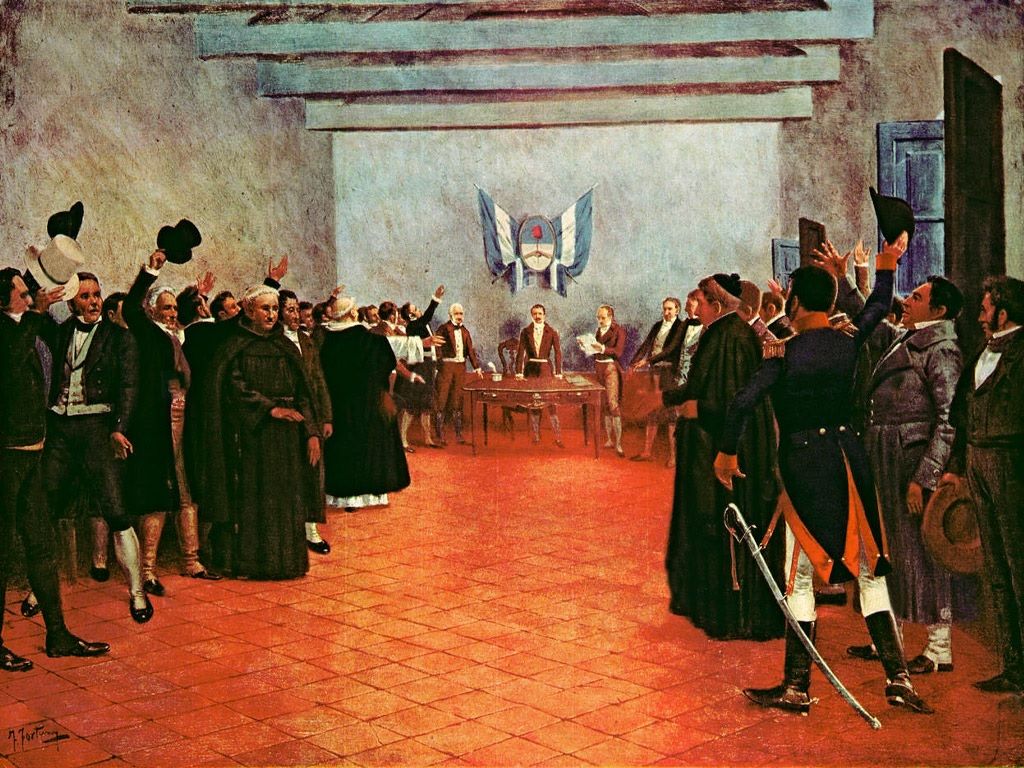
Francisco Fortuny's 1910 depiction of the Congreso de Tucumán. Public domain, via Wikimedia Commons.
Part I: how Argentina became independent
Before 1810: a viceroyalty, not "Argentina"
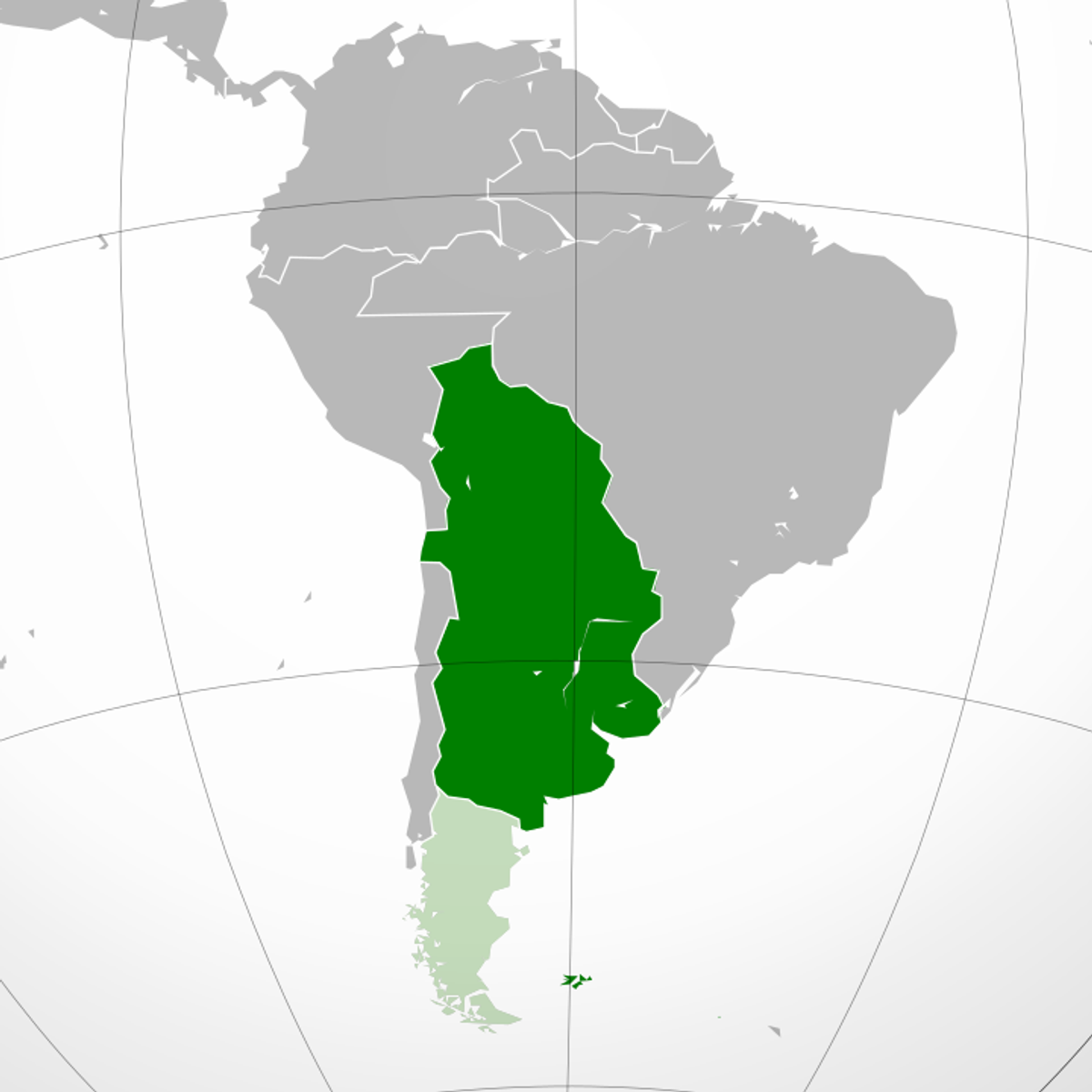
The schoolbook story often starts in May 1810. The institutional background starts earlier. In 1776 the Spanish Crown created the Viceroyalty of the Río de la Plata with Buenos Aires as capital, grouping jurisdictions that today cover Argentina, Uruguay, Paraguay and Bolivia. Ternavasio notes that this was not yet a natural Argentine unit: it was a heterogeneous imperial space with changing borders and competing territorial loyalties.
The British invasions of 1806–1807 matter because they exposed the weakness of Spanish authority and militarized Buenos Aires society. The city defended itself, gained political confidence and grew used to acting on its own before the formal May Revolution. Ternavasio also notes that Buenos Aires still behaved more like the center of a local governorship than the real capital of a huge integrated viceroyalty, until May 1810 forced it to try to command that space.
The Viceroyalty of the Río de la Plata in 1795, the imperial frame that 1810–1816 broke apart. Rasterized from TRAJAN 117, GFDL, via Wikimedia Commons.
1810: autonomy, not independence
The chain of events began not in Buenos Aires but in Europe. In 1808 Napoleon Bonaparte invaded Spain, forced the abdications of Carlos IV and Fernando VII and installed his brother Joseph Bonaparte on the Spanish throne. Spanish resistance juntas governed in Fernando's name; as they collapsed one by one, the legitimacy of colonial authorities in America collapsed with them. When news reached Buenos Aires in May 1810 that the Junta of Seville (the last major seat of Spanish resistance) had fallen, the criollos of Buenos Aires forced the issue.
During the Semana de Mayo (18–25 May 1810), Buenos Aires removed Viceroy Baltasar Hidalgo de Cisneros and installed the Primera Junta, presided over by Cornelio Saavedra. Mariano Moreno, Juan José Paso and Manuel Belgrano were among the main figures.
The Junta declared it governed "in the name of Sr. D. Fernando VII" (the famous "máscara de Fernando VII" / "mask of Ferdinand VII"). The legal theory often invoked was retroversión de la soberanía: with the king captive and the imperial order collapsing, sovereignty reverted to the pueblos. Ternavasio notes that "pueblo"/"pueblos" did not mean "the Argentine people" as a single nation; they could mean cities, provinces or local corporate communities claiming their own rights (CONICET / Ternavasio interview). Early 1810 looks less like "Argentina vs Spain" and more like a fight over who had the right to govern the ruins of the old viceroyalty. Either way, no independence was declared in 1810. Educ.ar frames 9 July as the first explicit will of emancipation after the political process begun in May (Educ.ar).
Buenos Aires tries to inherit the viceroyalty
After May 1810, Ternavasio argues, Buenos Aires tried to make the old viceroyalty obey the revolutionary government seated in Buenos Aires and only then discovered what its capital claim actually required (support from jurisdictions it had not previously needed to command in the same way). That is why Paraguay, the Banda Oriental (roughly modern Uruguay), Upper Peru (modern Bolivia) and the Litoral (the river provinces of northeastern Argentina) sit outside a single Argentine national story: Paraguay's autonomy became a point of no return; the Banda Oriental and Litoral tied themselves to the federal/confederal alternative of Artigas; Upper Peru remained militarily unstable.
Ternavasio treats the early conflict as civil war as much as anti-Spanish war: communities, cities, provinces, royalists, autonomists, centralists and federalists fought inside the collapsing Spanish monarchy. The "patriots vs Spain" framing becomes available only later.
Six years of war and quarrel (1810–1816)
The years between were not a quiet wait for a decision already made. Belgrano fought in Paraguay, the Banda Oriental and the north; Spanish loyalists pushed back hard in Upper Peru; Fernando VII returned to the throne and tried to restore imperial control; and Artigas's Liga Federal broke with Buenos Aires. By early 1816 the revolution faced royalist pressure, Portuguese pressure and civil conflict, which made formal independence harder to postpone.
Why Tucumán and not Buenos Aires
The provinces wanted a Congress outside Buenos Aires. Tucumán was inland, militarily safer and less identified with the port city's centralism. Choosing it signaled that independence would be a provincial decision, not another order from Buenos Aires.
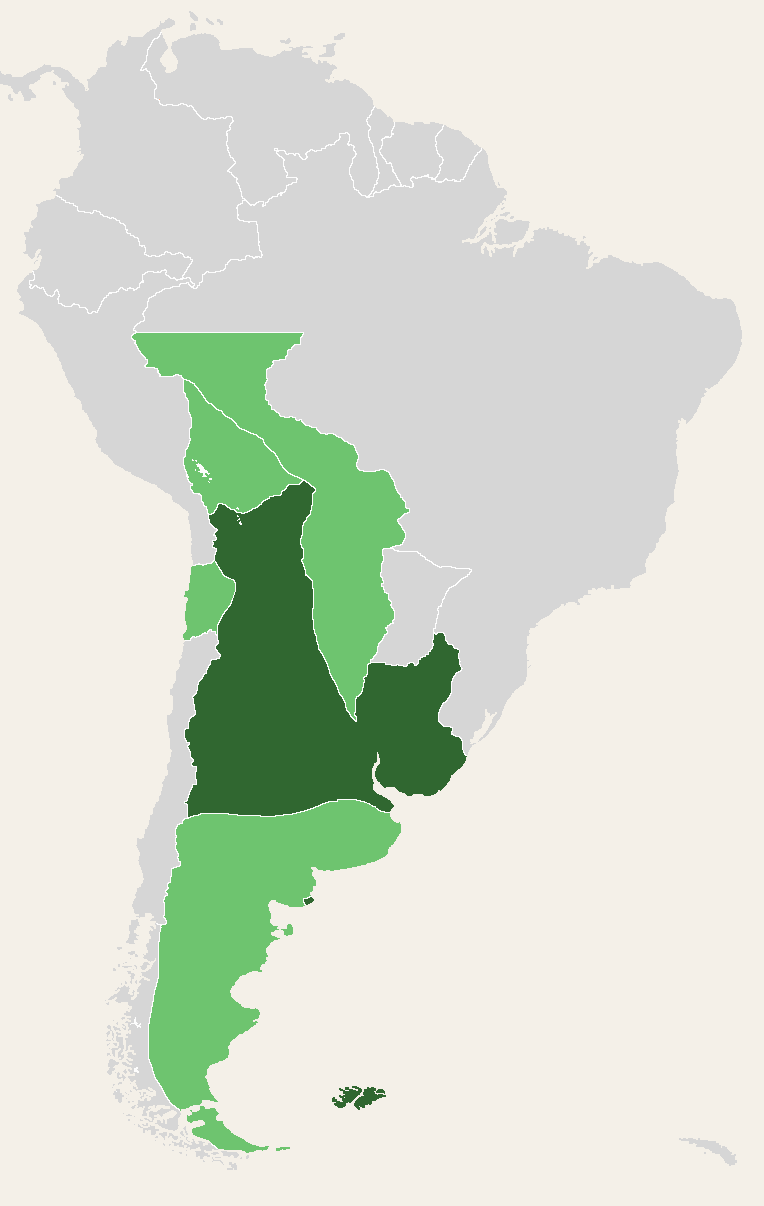
The Congress still did not represent every territory Buenos Aires hoped to inherit. It included interior and Alto Perú deputies, while the Litoral under Artigas, the Banda Oriental and Paraguay stayed out.
Approximate 1816 map of the United Provinces, useful mainly for showing how much the claim exceeded modern Argentina. Adapted from Misteruploader, CC BY-SA 4.0, via Wikimedia Commons.
San Martín's pressure and the "juridical" argument for independence
From Mendoza, where he was organizing the Army of the Andes, San Martín pressed the Congress to stop fighting as nominal vassals of the king. In an April 1816 letter to Tomás Godoy Cruz, he mocked the contradiction: "How long are we going to wait to declare our independence!" The declaration was a military necessity as much as a legal act.
The session of 9 July 1816
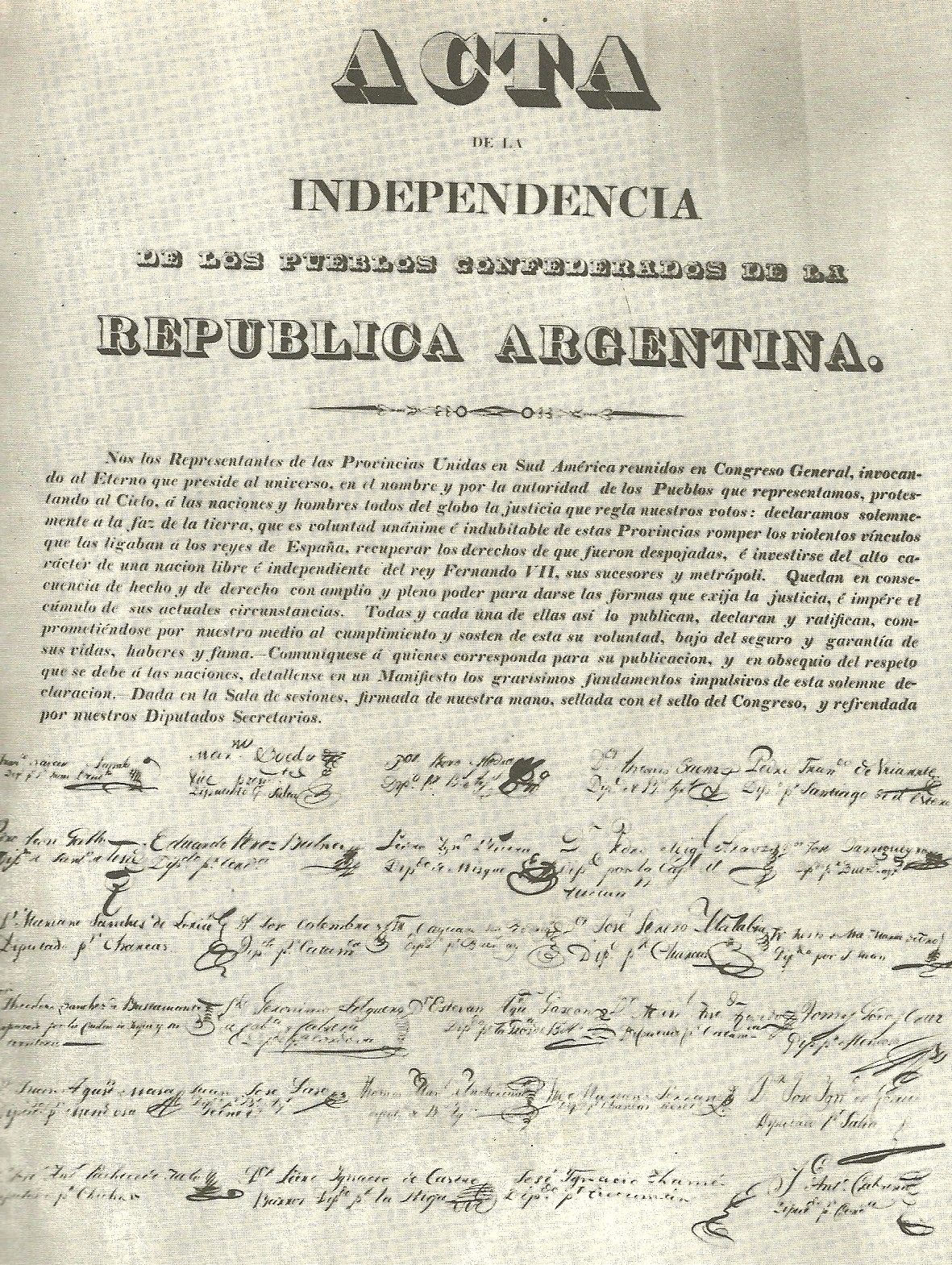
On 9 July 1816, the deputies met in the house of Francisca Bazán de Laguna. President Francisco Narciso de Laprida put the independence question to the room and the deputies answered yes. The Acta de la Independencia declared the provinces' will to break ties with the kings of Spain and become a free nation independent of Ferdinand VII, his successors and metropolis.
A printed Acta of the declaration. Public domain, via Wikimedia Commons.
"…and of all other foreign domination": the 19 July addition
The 9 July text broke with Spain but said nothing about other powers. In the following days, rumors circulated that the Director Pueyrredón, General Belgrano and even some deputies were entertaining schemes to hand the country to Portugal (or, earlier, to Britain; Alvear had floated a British protectorate in 1815). Belgrano's own monarchy proposal fed these fears.
A few days later, the Congress added "y de toda otra dominación extranjera", closing the door on rumors that the new state might be handed to Portugal or another power.
The monarchy-vs-republic debate and Belgrano's Inca prince
Independence did not settle the form of government. Constitutional monarchy still looked normal in post-Napoleonic Europe and Belgrano even proposed crowning a descendant of the Incas with the capital at Cuzco. San Martín, Güemes and Alto Perú deputies were sympathetic, but the plan collapsed under porteño elite opposition, no agreed candidate and racist objections. A durable republican constitution came only in 1853.
The Acta in Spanish, Quechua and Aymara
The Congress ordered the Acta printed in Quechua and Aymara as well as Spanish, because the United Provinces still claimed Alto Perú and wanted the declaration to circulate beyond Spanish-speaking elites. A Guaraní version was proposed but not distributed while the Litoral was at war with Buenos Aires.
After the declaration: the wider Spanish-American context
In 1817 San Martín crossed the Andes and defeated royalist forces at Chacabuco. The army could now claim to fight for a declared sovereign state, not for rebels still pretending loyalty to the king.
The Congress later approved a unitary constitution that failed, then dissolved after civil war. The declared "Provincias Unidas en Sud América" still bore little resemblance to today's Argentina: Alto Perú became Bolivia, while Uruguay's path to independence followed its own course.
Do neighbors celebrate this?
No neighboring country celebrates 9 July as its own national holiday. Chile and Peru remember parts of the same 1810s–1820s cycle positively, but through their own independence stories: in Chile, the crossing of the Andes and the battles of Chacabuco and Maipú are remembered as victories for Chilean and Argentine patriots, and San Martín and O'Higgins then organized the expedition to Peru (Memoria Chilena; San Martín / Memoria Chilena). That memory is not "Argentina intervened in us" so much as "a trans-Andean patriot army helped finish our war against Spain."
The more suspicious memories are in places where Buenos Aires tried to inherit the old viceroyalty. Paraguay's independence narrative stresses that Buenos Aires wanted to keep Paraguay inside those borders and sent Belgrano after Paraguay refused; Paraguayan patriots defeated his expedition at Paraguarí and Tacuarí and sought independence from both Spain and Buenos Aires (ABC Color). In the Banda Oriental, the Artiguist Protectorate built a federal alternative in opposition to Buenos Aires, so Uruguay's 1810s memory centers more on Artigas, local sovereignty and later Portuguese/Brazilian pressure than on Tucumán (Frega). Upper Peru sits between these cases: Charcas sent deputies to Tucumán, but Bolivia's later founding story is 1825, when the Alto Perú assembly chose not to join Argentina or Peru and declared its own state (Educa Bolivia).
International recognition after 1816
Recognition lagged behind the declaration. The compressed timeline is: 1818, Bouchard's Hawaiʻi episode is often remembered as the first recognition but is better treated as an irregular ship-and-flag episode (see the note below); 1823, the United States recognized the Government of Buenos Ayres and opened diplomatic relations later that year (U.S. Office of the Historian); 1825, Britain signed a Treaty of Friendship, Commerce and Navigation and recognized Argentina (UK History of Government); 1863, Spain finally recognized Argentina through the Treaty of Recognition, Peace and Friendship (Cancillería treaty PDF).
The name "Argentina" comes later
In 1816 the relevant name was Provincias Unidas en Sud América. Ternavasio notes that "Sudamérica" itself expressed uncertainty about which provinces would actually fall under the new legal condition, especially since the Banda Oriental and Litoral did not sit in the Congress. The failed centralist constitution of 1826 used the label República Argentina and declared a representative republican form, but provincial rejection prevented a stable modern state (Wikipedia; UCA on denominations). For Ternavasio, the history of the Argentine Republic begins stricto sensu only after Buenos Aires accepted the 1853 Constitution (after 1860).
Part II: how the holiday evolved
The first celebrations and the 19th-century see-saw
Celebrations began immediately in Tucumán, but for much of the 19th century 25 May kept the stronger place in patriotic culture. Rivadavia even folded 9 July into the May festivities; Rosas later restored it to full rank and used both holidays for federal political theater.
The Casa Histórica: demolition, the Templete and the 1943 reconstruction
The famous "Casita" was not originally a tiny cottage but a substantial colonial casona. The state later demolished almost all of it, preserving the oath room inside a decorative pavilion called the Templete. That pavilion helped create the popular image of a little adobe house.
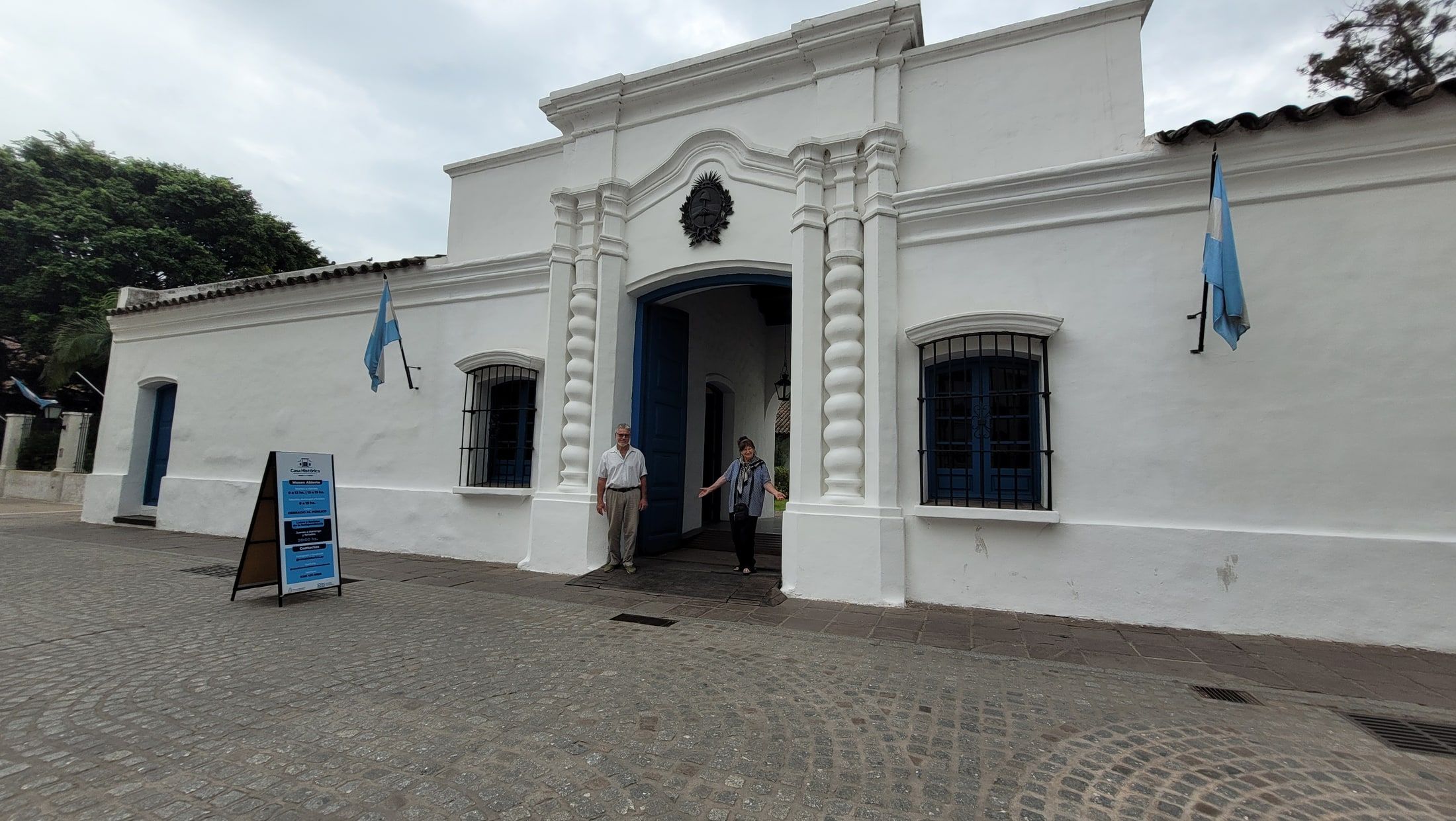
The current Casa Histórica is a 1940s reconstruction based on old photographs and plans. Even its familiar schoolbook colors changed: later research restored white walls and blue openings rather than the yellow-and-green scheme many Argentines learned in school.
The present Casa Histórica in Tucumán, photographed in 2025 and resized from the original. Horacio Cambeiro, CC BY-SA 4.0, via Wikimedia Commons.
The Centenario (1916): a subdued centennial
The 100th anniversary in 1916 was muted. World War I kept foreign guests away, President Victorino de la Plaza skipped Tucumán and the moment sat in the shadow of the more lavish 1910 May centenary.
Balmaceda and others note an asymmetry that stuck: 25 May is remembered more vividly than 9 July in popular culture, partly because May 1810 has better-known protagonists in schoolbooks (La Nación).
Perón and the "Economic Independence" of 1947
On 9 July 1947, President Juan Domingo Perón staged an act of Independencia Económica at the Casa Histórica. It cast Peronist nationalizations and economic policy as a second emancipation, deliberately echoing 1816 (Infobae).
The Sesquicentenario (1966) and the dictatorships
The 150th anniversary in 1966 was swallowed by politics: Arturo Illia was overthrown days before the commemoration and the dictatorship reduced the anniversary to a military parade.
In 1975, the Peronist government launched Operativo Independencia, a military campaign in Tucumán against the ERP. Its name and location still tie the holiday to Argentina's later memory politics.
Modern commemoration: the standard ritual
Contemporary 9 July commemorations are usually centered on Tucumán and include:
A presidential visit to Tucumán and the Casa Histórica (in most years);
The Tedeum (Te Deum mass) in the Cathedral of San Miguel de Tucumán;
The izamiento (flag raising) in Plaza Independencia;
The "chocolate patrio" (hot chocolate shared in the plaza in the winter morning);
A desfile cívico-militar (civic-military parade) with the armed forces, gaucho associations, indigenous communities, immigrant collectivities and schools;
Nationwide Te Deums, school pageants and flag displays. Under Ley 27.399 (2017), 9 July is listed among Argentina's feriados nacionales inamovibles (immovable national holidays).
9 July falls in the depth of the southern winter, so the traditional food is warm and heavy: especially locro, plus empanadas, pastelitos, humita and tortas fritas. Locro is a slow-cooked Andean stew of maize, beans, squash and meat, now eaten on both national dates, 25 May and 9 July.
The patriotic link is newer than the holiday itself: food historian Carina Perticone argues that locro became the dominant patriotic dish in Buenos Aires only in the 20th century (iProfesional interview).
The Bicentenario (2016)
On 9 July 2016, President Mauricio Macri led the Bicentenario ceremonies in Tucumán, hosted Spain's emeritus king Juan Carlos I and framed independence around Tucumán without mentioning May 1810, another example of the 1810/1816 conflation.
The Milei years (2024–2026): politics returns to Tucumán
Under President Javier Milei, 9 July again became a stage for national politics, part of the long tradition of later governments reusing the date. On 9 July 2024 he signed the "Pacto de Mayo" with 18 governors in the Casa Histórica. In the official speech, he presented 1816 as the end of the revolution and the beginning of a new order for the Provincias Unidas, then claimed the same role for his own pact: "El 9 de julio de 2024, con la firma de este Acta de Mayo… anunciamos también el puntapié inicial de un nuevo orden" ("On 9 July 2024, with the signing of this Act of May... we also announce the starting point of a new order"; Casa Rosada, 9 July 2024).
In 2025 he cancelled the Tucumán vigilia. The government cited fog and flight conditions; only a handful of governors had confirmed attendance, a sharp contrast with the 2024 photo. He marked the day instead at the Campo Argentino de Polo in Buenos Aires (TN).
In 2026 he returned to the Casa Histórica and leaned directly on the historical material that this article traces. He opened with San Martín's Army of the Andes line, "Seamos libres, y lo demás no importa nada" ("Let us be free, and the rest matters not"), then called his economic program "una suerte de cruce de los Andes en materia económica" ("a kind of Crossing of the Andes in economic affairs") and the moment "una especie de segunda Independencia" ("a kind of second independence"). He compared the colonial viceroyalty's failure toward the provinces with the modern national state's failure toward them, and likened his cabinet to "los librepensadores de 1816" ("the freethinkers of 1816"; Casa Rosada, 9 July 2026). The "second independence" framing follows the same pattern as Perón's 1947 Independencia Económica: another government using Tucumán to claim a sequel to 1816.
The period also brought a dispute over national museum leadership and budgets, with historians accusing the government of politicizing heritage institutions and the government saying it was removing ideological bias (Perfil).
Common mix-ups
9 July 1816 ≠ the modern Argentine Republic. The Act declared the independence of the Provincias Unidas en Sud América, a larger entity that then included the Alto Perú. The name "Argentina" and today's territory consolidated later, especially after 1853–1860 (Ternavasio; Wikipedia).
May 1810 ≠ independence. 1810 was autonomy under the "mask of Ferdinand VII"; 1816 was formal independence and sovereignty. The conflation is common, including in presidential speeches (Macri in 2016).
"Argentina vs Spain" is incomplete. Early conflict was also civil war inside the old imperial order: cities vs capital, provinces vs provinces, Americans vs peninsulares, federalists vs centralists (Ternavasio).
July was not always the main patriotic holiday. May 25 had an earlier and often more privileged place; Fiestas Julias were added after 1816 (Educ.ar / Ternavasio).
The Congress did not speak for all of modern Argentina. The Litoral under Artigas stayed out; Charcas (today Bolivia) sent deputies (Educ.ar).
Independence did not settle republicanism. Constitutional monarchy, including Belgrano's Inca proposal, was seriously debated; it failed for political and social reasons, not because it was a joke (El Historiador).
The Hawaiʻi recognition story is half-true. A great trivia version says the Kingdom of Hawaiʻi was the first state to recognize Argentine independence. The real episode is stranger: in 1818 the Argentine privateer Hipólito Bouchard reached Hawaiʻi, found a mutinied Argentine ship that had been sold to Kamehameha I and negotiated its return. Bartolomé Mitre later treated the agreement as Argentina's first international treaty; the narrower reading is that Bouchard solved a ship-and-flag dispute, not that Hawaiʻi opened normal diplomatic relations. So: funny, not invented from nothing, but not normal state recognition either (Images of Old Hawaiʻi; Nuestro Mar).
"Casita" and yellow-green walls. The house was a large colonial casona; the tiny-cottage image comes mainly from the 1904 Templete. Today's museum building is a 1943 reconstruction. School yellow-and-green colors come from a 19th-century painting; a 1996 study found white walls with Prussian-blue openings for 1816.
Panorama
El 9 de julio es el Día de la Independencia argentina: un feriado nacional de invierno que conmemora la declaración hecha en San Miguel de Tucumán el 9 de julio de 1816 por el Congreso de Tucumán. Los diputados declararon a las Provincias Unidas en Sud América (una entidad política que reclamaba más territorio que la Argentina actual) independientes de España; días después agregaron la ruptura con toda otra dominación extranjera (Educ.ar; Acta / Wikipedia). Bajo la Ley 27.399 (2017), la fecha es feriado nacional inamovible.
Las conmemoraciones oficiales suelen centrarse en Tucumán y la Casa Histórica: Te Deum, izamiento de la bandera, desfile cívico-militar, presencia presidencial en la mayoría de los años. En todo el país se comen platos de invierno, sobre todo locro, y las escuelas hacen actos y banderas. La Argentina también conserva el 25 de mayo (Revolución de Mayo de 1810) como gran fecha patria; las dos se mencionan juntas y a veces se confunden (La Nación). El historiador Daniel Balmaceda resume la diferencia como autonomía en 1810 versus independencia y soberanía en 1816.
El resto de esta página cuenta cómo se llegó a la declaración, quiénes quedaron adentro y afuera, cómo recuerdan países vecinos el mismo ciclo revolucionario, cuándo fue reconocida la independencia en el exterior, cómo cambió después la fiesta y las confusiones habituales. Gobiernos posteriores reutilizaron el 9 de julio (Rivadavia 1826, Rosas 1835, Perón 1947, Operativo Independencia 1975, administraciones recientes). La propia Casa Histórica fue demolida en gran parte en 1903–04 y reconstruida en 1943.
Representación del Congreso de Tucumán pintada por Francisco Fortuny en 1910. Dominio público, vía Wikimedia Commons.
Parte I: cómo se independizó la Argentina
Antes de 1810: un virreinato, no "la Argentina"
El relato escolar suele empezar en mayo de 1810. El trasfondo institucional empieza antes. En 1776 la Corona española creó el Virreinato del Río de la Plata con Buenos Aires como capital, agrupando jurisdicciones que hoy cubren Argentina, Uruguay, Paraguay y Bolivia. Ternavasio señala que eso aún no era una unidad argentina natural: era un espacio imperial heterogéneo, con fronteras cambiantes y lealtades territoriales en competencia.
Las invasiones inglesas de 1806–1807 importan porque expusieron la debilidad de la autoridad española y militarizaron la sociedad porteña. La ciudad se defendió, ganó confianza política y se acostumbró a actuar por su cuenta antes de la Revolución de Mayo formal. Ternavasio también señala que Buenos Aires todavía se comportaba más como centro de una gobernación local que como capital real de un virreinato enorme e integrado, hasta que mayo de 1810 la obligó a intentar comandar ese espacio.
El Virreinato del Río de la Plata en 1795, el marco imperial que el ciclo 1810–1816 empezó a romper. Rasterizado desde TRAJAN 117, GFDL, vía Wikimedia Commons.
1810: autonomía, no independencia
La cadena de hechos no empezó en Buenos Aires sino en Europa. En 1808 Napoleón Bonaparte invadió España, forzó las abdicaciones de Carlos IV y Fernando VII e instaló a su hermano José en el trono español. Las juntas de resistencia españolas gobernaban en nombre de Fernando; a medida que caían una a una, se derrumbaba con ellas la legitimidad de las autoridades coloniales en América. Cuando en mayo de 1810 llegó a Buenos Aires la noticia de que la Junta de Sevilla (el último gran asiento de la resistencia española) había caído, los criollos porteños forzaron la cuestión.
Durante la Semana de Mayo (18–25 de mayo de 1810), Buenos Aires desplazó al virrey Baltasar Hidalgo de Cisneros e instaló la Primera Junta, presidida por Cornelio Saavedra. Mariano Moreno, Juan José Paso y Manuel Belgrano estuvieron entre las figuras principales.
La Junta declaró gobernar "en nombre del Sr. D. Fernando VII" (la famosa "máscara de Fernando VII"). La teoría jurídica a menudo invocada fue la retroversión de la soberanía: con el rey cautivo y el orden imperial en colapso, la soberanía revertía a los pueblos. Ternavasio señala que "pueblo"/"pueblos" no significaba "el pueblo argentino" como nación única; podía significar ciudades, provincias o comunidades corporativas locales que reclamaban derechos propios (CONICET / Ternavasio). 1810 se parece menos a "Argentina vs. España" y más a una pelea por quién tenía derecho a gobernar las ruinas del viejo virreinato. En cualquier caso, en 1810 no se declaró la independencia. Educ.ar enmarca el 9 de julio como la primera voluntad explícita de emancipación tras el proceso político iniciado en mayo (Educ.ar).
Buenos Aires intenta heredar el virreinato
Después de mayo de 1810, según Ternavasio, Buenos Aires intentó que el viejo virreinato obedeciera al gobierno revolucionario asentado en Buenos Aires, y recién entonces descubrió qué exigía de verdad su reclamo de capital: apoyo de jurisdicciones que antes no necesitaba comandar del mismo modo. Por eso Paraguay, la Banda Oriental (a grandes rasgos, el Uruguay actual), el Alto Perú (Bolivia actual) y el Litoral (provincias fluviales del nordeste argentino) quedan fuera de un solo relato nacional argentino: la autonomía paraguaya se volvió un punto de no retorno; la Banda Oriental y el Litoral se ataron a la alternativa federal/confederal de Artigas; el Alto Perú siguió militarmente inestable.
Ternavasio trata el conflicto temprano tanto como guerra civil como guerra anti-española: comunidades, ciudades, provincias, realistas, autonomistas, centralistas y federales pelearon dentro de la monarquía española en colapso. El marco de "patriotas vs. España" solo se vuelve disponible más tarde.
Seis años de guerra y pelea (1810–1816)
Los años intermedios no fueron una espera tranquila de una decisión ya tomada. Belgrano peleó en Paraguay, la Banda Oriental y el norte; los realistas empujaron fuerte en el Alto Perú; Fernando VII volvió al trono y quiso restaurar el control imperial; y la Liga Federal de Artigas rompió con Buenos Aires. Para comienzos de 1816 la revolución enfrentaba presión realista, presión portuguesa y conflicto civil, así que la independencia formal era cada vez más difícil de postergar.
Por qué Tucumán, y no Buenos Aires
Las provincias querían un Congreso fuera de Buenos Aires. Tucumán quedaba en el interior, era más segura militarmente y estaba menos identificada con el centralismo porteño. Elegirla señalaba que la independencia sería una decisión provincial, no otra orden de Buenos Aires.
Aun así, el Congreso no representaba todos los territorios que Buenos Aires esperaba heredar. Incluía diputados del interior y del Alto Perú, mientras el Litoral artiguista, la Banda Oriental y Paraguay quedaban afuera.
Mapa aproximado de 1816 de las Provincias Unidas, útil sobre todo para ver cuánto excedía el reclamo a la Argentina actual. Adaptado desde Misteruploader, CC BY-SA 4.0, vía Wikimedia Commons.
La presión de San Martín y el argumento "jurídico" de la independencia
Desde Mendoza, donde organizaba el Ejército de los Andes, San Martín presionó al Congreso para dejar de pelear como vasallos nominales del rey. En una carta de abril de 1816 a Tomás Godoy Cruz, se burló de la contradicción: "¡Hasta cuándo esperamos declarar nuestra independencia!" La declaración era una necesidad militar tanto como un acto jurídico.
La sesión del 9 de julio de 1816
El 9 de julio de 1816, los diputados se reunieron en la casa de Francisca Bazán de Laguna. El presidente Francisco Narciso de Laprida puso la pregunta de la independencia, y los diputados respondieron que sí. El Acta de la Independencia declaró la voluntad de romper los vínculos con los reyes de España y constituirse en nación libre e independiente de Fernando VII, sus sucesores y metrópoli.
Un impreso del Acta de la declaración. Dominio público, vía Wikimedia Commons.
"…y de toda otra dominación extranjera": el agregado del 19 de julio
El texto del 9 de julio rompía con España pero no decía nada sobre otras potencias. En los días siguientes circularon rumores de que el Director Pueyrredón, el general Belgrano e incluso algunos diputados barajaban esquemas para entregar el país a Portugal (o, antes, a Gran Bretaña: Alvear había flotado un protectorado británico en 1815). La propia propuesta monárquica de Belgrano alimentó esos temores.
Días después, el Congreso agregó "y de toda otra dominación extranjera", cerrando la puerta a rumores de entrega a Portugal u otra potencia.
El debate monarquía-república y el príncipe inca de Belgrano
La independencia no resolvió la forma de gobierno. La monarquía constitucional todavía parecía normal en la Europa posnapoleónica, y Belgrano llegó a proponer coronar a un descendiente de los Incas con capital en Cuzco. San Martín, Güemes y diputados altoperuanos simpatizaron con la idea, pero el plan cayó por oposición de la elite porteña, falta de candidato acordado y objeciones racistas. Una constitución republicana durable llegó recién en 1853.
El Acta en español, quechua y aymara
El Congreso ordenó imprimir el Acta en quechua y aymara además de español, porque las Provincias Unidas todavía reclamaban el Alto Perú y querían que la declaración circulara más allá de las elites hispanohablantes. Se propuso una versión en guaraní, pero no se distribuyó mientras el Litoral estaba en guerra con Buenos Aires.
Después de la declaración: el contexto hispanoamericano más amplio
En 1817 San Martín cruzó los Andes y derrotó a los realistas en Chacabuco. El ejército podía presentarse como fuerza de un Estado soberano declarado, no como rebeldes que todavía fingían lealtad al rey.
El Congreso aprobó después una constitución unitaria que fracasó, y luego se disolvió tras la guerra civil. Las "Provincias Unidas en Sud América" todavía se parecían poco a la Argentina actual: el Alto Perú terminó como Bolivia, mientras Uruguay siguió su propio camino de independencia.
¿Los países vecinos celebran esto?
Ningún país vecino celebra el 9 de julio como feriado nacional propio. Chile y Perú recuerdan partes del mismo ciclo de 1810–1820 de manera positiva, pero dentro de sus propios relatos de independencia: en Chile, el cruce de los Andes y las batallas de Chacabuco y Maipú aparecen como triunfos de patriotas chilenos y argentinos, y San Martín y O'Higgins organizaron después la expedición al Perú (Memoria Chilena; San Martín / Memoria Chilena). Esa memoria no es tanto "Argentina intervino en nosotros" como "un ejército patriota transandino ayudó a cerrar nuestra guerra contra España".
Las memorias más desconfiadas aparecen donde Buenos Aires intentó heredar el viejo virreinato. El relato paraguayo subraya que Buenos Aires quería mantener al Paraguay dentro de esas fronteras y envió a Belgrano después de la negativa paraguaya; los patriotas paraguayos derrotaron su expedición en Paraguarí y Tacuarí y buscaron independizarse tanto de España como de Buenos Aires (ABC Color). En la Banda Oriental, el Protectorado artiguista construyó una alternativa federal en oposición a Buenos Aires, así que la memoria uruguaya de la década de 1810 gira más alrededor de Artigas, la soberanía local y la presión portuguesa/brasileña posterior que de Tucumán (Frega). El Alto Perú queda en un punto intermedio: Charcas envió diputados a Tucumán, pero el relato fundador boliviano es de 1825, cuando la asamblea altoperuana eligió no unirse ni a la Argentina ni al Perú y declaró su propio Estado (Educa Bolivia).
Reconocimiento internacional después de 1816
El reconocimiento fue bastante más lento que la declaración. La cronología breve es: en 1818, el episodio de Bouchard en Hawái suele recordarse como el primer reconocimiento, pero conviene tratarlo como un episodio irregular de barco y bandera (ver la nota más abajo); en 1823, Estados Unidos reconoció al Gobierno de Buenos Ayres y abrió relaciones diplomáticas más tarde ese mismo año (U.S. Office of the Historian); en 1825, Gran Bretaña firmó un Tratado de Amistad, Comercio y Navegación y reconoció a la Argentina (UK History of Government); en 1863, España finalmente reconoció a la Argentina por el Tratado de Reconocimiento, Paz y Amistad (PDF de Cancillería).
El nombre "Argentina" llega después
En 1816 el nombre relevante fue Provincias Unidas en Sud América. Ternavasio señala que "Sudamérica" expresaba incertidumbre sobre qué provincias caerían realmente bajo la nueva condición legal, sobre todo porque la Banda Oriental y el Litoral no se sentaron en el Congreso. La fallida constitución centralista de 1826 usó la etiqueta República Argentina y declaró una forma representativa republicana, pero el rechazo provincial impidió un Estado moderno estable (Wikipedia; UCA). Para Ternavasio, la historia de la República Argentina empieza stricto sensu recién después de que Buenos Aires aceptara la Constitución de 1853 (después de 1860).
Parte II: cómo evolucionó la fiesta
Las primeras celebraciones y el vaivén del siglo XIX
Los festejos empezaron de inmediato en Tucumán, pero durante buena parte del siglo XIX el 25 de mayo conservó más peso en la cultura patriótica. Rivadavia incluso plegó el 9 de julio a las fiestas de mayo; Rosas lo restauró después a rango pleno y usó ambas fechas para teatro político federal.
La Casa Histórica: demolición, el Templete y la reconstrucción de 1943
La famosa "Casita" no fue originalmente una choza diminuta sino una casona colonial grande. El Estado demolió después casi todo y conservó el salón de la jura dentro de un pabellón decorativo llamado Templete. Ese pabellón ayudó a crear la imagen popular de una casita de adobe.
La Casa Histórica actual es una reconstrucción de los años cuarenta basada en fotos y planos antiguos. Incluso sus colores escolares cambiaron: investigaciones posteriores restauraron paredes blancas y aberturas azules, no el esquema amarillo y verde que aprendieron muchos argentinos.
La Casa Histórica actual en Tucumán, fotografiada en 2025 y redimensionada desde el original. Horacio Cambeiro, CC BY-SA 4.0, vía Wikimedia Commons.
El Centenario (1916): un centenario sobrio
El centenario de 1916 fue apagado. La Primera Guerra Mundial mantuvo lejos a los invitados extranjeros, Victorino de la Plaza no viajó a Tucumán y la fecha quedó a la sombra del centenario de Mayo de 1910, mucho más fastuoso.
Balmaceda y otros señalan una asimetría que se instaló: el 25 de mayo se recuerda más vívidamente que el 9 de julio en la cultura popular, en parte porque mayo de 1810 tiene protagonistas más conocidos en el relato escolar (La Nación).
Perón y la "Independencia Económica" de 1947
El 9 de julio de 1947, Juan Domingo Perón montó un acto de Independencia Económica en la Casa Histórica. Presentó nacionalizaciones y política económica peronista como una segunda emancipación, en eco deliberado de 1816 (Infobae).
El Sesquicentenario (1966) y las dictaduras
El 150º aniversario en 1966 quedó tragado por la política: Arturo Illia fue derrocado días antes de la conmemoración, y la dictadura redujo el aniversario a un desfile militar.
En 1975, el gobierno peronista lanzó el Operativo Independencia, una campaña militar en Tucumán contra el ERP. Su nombre y su ubicación todavía atan la fecha a la política argentina de la memoria.
La conmemoración moderna: el ritual estándar
Las conmemoraciones contemporáneas del 9 de julio suelen centrarse en Tucumán e incluyen:
Una visita presidencial a Tucumán y a la Casa Histórica (en la mayoría de los años);
El Tedeum en la Catedral de San Miguel de Tucumán;
El izamiento de la bandera en Plaza Independencia;
El "chocolate patrio" (chocolate caliente compartido en la plaza en la mañana invernal);
Un desfile cívico-militar con fuerzas armadas, asociaciones gauchas, comunidades indígenas, colectividades inmigrantes y escuelas;
Te Deums, actos escolares y despliegues de banderas en todo el país. Bajo la Ley 27.399 (2017), el 9 de julio figura entre los feriados nacionales inamovibles.
Como el 9 de julio cae en lo más duro del invierno austral, la comida tradicional es caliente y pesada: el locro primero, más empanadas, pastelitos, humita y tortas fritas. El locro es un guiso andino de maíz, porotos, zapallo y carne, y hoy se come en ambas fechas patrias, el 25 de mayo y el 9 de julio.
El vínculo patriótico es más nuevo que la fiesta: la historiadora de la comida Carina Perticone sostiene que el locro se volvió plato patrio dominante en Buenos Aires recién en el siglo XX (entrevista iProfesional).
El Bicentenario (2016)
El 9 de julio de 2016, el presidente Mauricio Macri encabezó el Bicentenario en Tucumán, recibió al rey emérito español Juan Carlos I y enmarcó la independencia alrededor de Tucumán sin mencionar mayo de 1810, otro ejemplo de la confusión 1810/1816.
Los años Milei (2024–2026): la política vuelve a Tucumán
Bajo el presidente Javier Milei, el 9 de julio volvió a ser escenario de política nacional, en la misma tradición larga de gobiernos posteriores que reutilizan la fecha. El 9 de julio de 2024 firmó el "Pacto de Mayo" con 18 gobernadores en la Casa Histórica. En el discurso oficial presentó 1816 como el fin de la revolución y el comienzo de un nuevo orden para las Provincias Unidas, y reclamó el mismo papel para su propio acto: "El 9 de julio de 2024, con la firma de este Acta de Mayo… anunciamos también el puntapié inicial de un nuevo orden" (Casa Rosada, 9 de julio de 2024).
En 2025 canceló la vigilia en Tucumán. El gobierno alegó niebla e impedimentos de vuelo; solo unos pocos gobernadores habían confirmado asistencia, un contraste fuerte con la foto de 2024. Marcó el día en el Campo Argentino de Polo, en Buenos Aires (TN).
En 2026 volvió a la Casa Histórica y apoyó el discurso en el mismo elenco histórico de esta página. Abrió con la frase de San Martín ante el Ejército de los Andes, "Seamos libres, y lo demás no importa nada," llamó a su programa económico "una suerte de cruce de los Andes en materia económica" y al momento "una especie de segunda Independencia." Comparó el fracaso del virreinato colonial hacia las provincias con el fracaso del Estado nacional moderno hacia ellas, y asemejó a su gabinete a "los librepensadores de 1816" (Casa Rosada, 9 de julio de 2026). El marco de la "segunda independencia" entra en el mismo surco que la Independencia Económica de Perón en 1947: otro gobierno usando Tucumán para reclamar una secuela de 1816.
El período también trajo una disputa por la dirección y el presupuesto de museos nacionales, con historiadores acusando al gobierno de politizar el patrimonio y el gobierno diciendo que quitaba sesgo ideológico (Perfil).
Confusiones habituales
El 9 de julio de 1816 ≠ la República Argentina moderna. El Acta declaró la independencia de las Provincias Unidas en Sud América, una entidad más amplia que entonces incluía el Alto Perú. El nombre "Argentina" y el territorio de hoy se consolidaron después, sobre todo tras 1853–1860 (Ternavasio; Wikipedia).
Mayo de 1810 ≠ independencia. 1810 fue autonomía bajo la "máscara de Fernando VII"; 1816 fue independencia formal y soberanía. La confusión es frecuente, incluso en discursos presidenciales (Macri en 2016).
"Argentina vs. España" es incompleto. El conflicto temprano también fue guerra civil dentro del viejo orden imperial: ciudades vs. capital, provincias vs. provincias, americanos vs. peninsulares, federales vs. centralistas (Ternavasio).
Julio no siempre fue la fiesta patria principal. El 25 de mayo tuvo un lugar anterior y a menudo más privilegiado; las Fiestas Julias se agregaron después de 1816 (Educ.ar / Ternavasio).
El Congreso no habló por toda la Argentina moderna. El Litoral bajo Artigas quedó afuera; Charcas (hoy Bolivia) envió diputados (Educ.ar).
La independencia no resolvió el republicanismo. La monarquía constitucional, incluida la propuesta inca de Belgrano, se debatía en serio; fracasó por razones políticas y sociales, no porque fuera una broma (El Historiador).
La historia de Hawái es medio cierta. La versión de trivia dice que el Reino de Hawái fue el primer Estado que reconoció la independencia argentina. El episodio real es más raro: en 1818 el corsario argentino Hipólito Bouchard llegó a Hawái, encontró un barco argentino amotinado que había sido vendido a Kamehameha I y negoció su devolución. Bartolomé Mitre trató después ese acuerdo como el primer tratado internacional argentino; la lectura más estrecha es que Bouchard resolvió un asunto de barco y bandera, no que Hawái abriera relaciones diplomáticas normales. O sea: gracioso, no inventado de la nada, pero tampoco un reconocimiento estatal normal (Images of Old Hawaiʻi; Nuestro Mar).
"Casita" y paredes amarillo-verde. La casa era una casona colonial grande; la imagen de choza viene sobre todo del Templete de 1904. El edificio del museo hoy es una reconstrucción de 1943. El amarillo y verde escolares vienen de un cuadro del siglo XIX; un estudio de 1996 halló paredes blancas con aberturas de azul de Prusia para 1816.